
How Much Does It Cost to Build a Home in Perth in 2026?
27 Feb 2026
If you're thinking about building a new home in Perth, one of the first questions on your mind is probably: how much is this actually going to cost? The cost to build a house in Perth in 2026 varies widely depending on your home's size, design complexity, site conditions, and the level of inclusions you choose — but having a realistic understanding of the numbers is the first step toward making your dream home a reality.
Perth's building market has shifted significantly over the past few years. Home prices across the city have almost doubled over the past five years, and KPMG projects Perth house prices to rise a further 12.8% in 2026 — the strongest growth of any Australian capital. That means building a new home remains one of the smartest ways to get into the market at a price point you can control.
In this guide, we'll break down what you can realistically expect to pay, what drives those costs up or down, and how to stay on budget without compromising on the things that matter.

How Much Does It Cost to Build a Home in Perth in 2026?
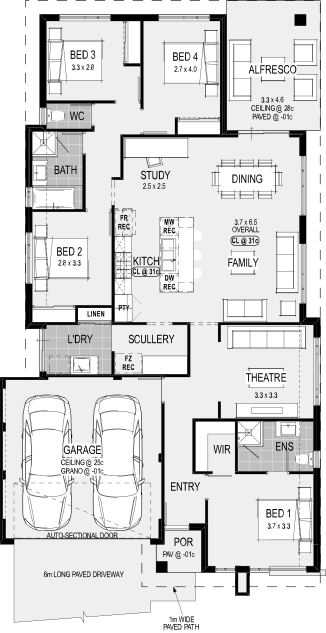
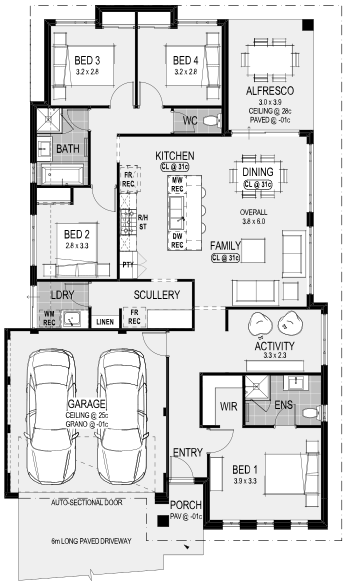
The short answer: On average a 4 bed, 2 bath home in Perth costs $420,000 to build, depending on size, design, and specification level.
A more useful way to think about it is cost per square metre. In 2026, Perth building costs generally sit within these ranges:
These figures cover the building contract itself. Remember that your total project cost also includes land, and several other items we'll cover below. Though costs can shift throughout the year as material and labour prices change.
💡 Tip: A house and land package bundles your home design with a matched block of land, giving you a clearer picture of total cost upfront and often saving you money compared to purchasing land and building separately.
What Affects Your Build Cost — The Key Variables
No two builds are the same, and understanding what pushes costs up or down gives you far more control over your budget. Here are the main factors:
1. Home size and number of storeys
This is the single biggest cost driver. A larger home means more materials, more labour, and a longer build time. Two-storey homes cost more per square metre than single storey designs due to structural requirements, scaffolding, and additional engineering — but they give you more living space on a smaller block, which can save you money on land.
2. Design complexity
A straightforward rectangular floor plan is the most cost-efficient to build. Angles, curves, split levels, and complex rooflines all add cost. That doesn't mean you need to settle for a basic box — modern home designs achieve striking street appeal through smart elevation choices and material combinations without unnecessary structural complexity.
3. Site conditions
Your block of land has a major impact on cost. Sloping sites may need retaining walls and additional earthworks. Sandy soil, rock, or high water tables can increase foundation costs. Sites with poor access can make it harder (and more expensive) to get materials and equipment in.
4. Inclusions level
The difference between a base-level home and one with premium inclusions can be $30,000–$50,000 or more. We'll break this down in the next section.
5. Location within Perth
Building costs can vary by suburb due to council requirements, soil conditions, and logistics. Outer suburbs with newer estates tend to have more straightforward site conditions, while established inner suburbs may involve demolition, tighter access, and stricter planning rules.
6. Current market conditions
In 2026, Perth's building market continues to feel the effects of trades shortages driven by major infrastructure projects across WA. Material costs have stabilised somewhat compared to the sharp increases of 2022–2024, but skilled labour remains in high demand, which keeps build times and costs elevated.
Standard vs Premium Inclusions — What's the Real Difference?
Inclusions are one of the areas where build costs can vary dramatically, and it's worth understanding exactly what you're getting at each level.
Standard or base-level inclusions typically cover the essentials: basic tapware and fittings, laminate benchtops, builder-grade flooring, and standard cabinetry. These homes are functional and well-built, but you may find yourself wanting to upgrade certain finishes down the track.
Mid-range or designer inclusions (around $30,000 in added value) start to elevate the feel of the home. Think stone benchtops, upgraded tapware with a European-styled design, overhead kitchen cupboards for extra storage, and better quality flooring throughout. This is the level where most owner-occupiers feel genuinely happy with their home from day one.
Premium or luxury inclusions ($50,000+ in added value) take things further with features like our Luxury Kitchen with waterfall-edge stone benchtops, a dedicated scullery, premium laundry with stone benchtops and overhead cupboards, reverse cycle air conditioning, and high-end fixtures and fittings throughout. At Home Group, our Luxury Specification includes up to $80,000 worth of inclusions — so you get a genuinely premium home without paying custom-build prices.
The difference between standard and luxury isn't just cosmetic — it's about whether your home feels finished and liveable from the moment you move in, or whether you're budgeting for upgrades for years to come.
Hidden Costs Most First-Time Builders Don't Expect
The building contract price is only part of the picture. If you're building for the first time, these are the additional costs that often catch people off guard:
- Siteworks and earthworks: Preparing your block for construction — levelling, compacting, removing vegetation or debris. On a straightforward block, this might be $5,000–$15,000. On a sloping or challenging site, it can be $20,000–$50,000+.
- Retaining walls: If your block has any slope, retaining walls may be required. Costs vary widely based on height and length, but budget $5,000–$30,000+.
- Soil testing and engineering: A geotechnical report ($500–$1,500) tells your builder what's under the surface and determines your foundation type. Poor soil conditions can add significantly to slab costs.
- Council and planning fees: Development applications, building permits, and compliance certificates typically run $3,000–$8,000.
- Services connections: Connecting water, sewer, power, gas, and communications to your block can cost $5,000–$15,000 depending on proximity to existing infrastructure.
- Landscaping and fencing: Often not included in the building contract. A basic front and back garden with fencing can cost $10,000–$30,000.
- Window treatments, flooring upgrades, and fixtures: If these aren't part of your inclusions package, budget for them separately.
- Temporary accommodation: If you're not living with family during the build, you'll need to cover rent or other accommodation for the duration.
💡 First-time builder tip: When comparing builder quotes, always ask what's included and what's not. The cheapest contract price doesn't always mean the cheapest total project cost. A builder like Home Group that includes premium inclusions as standard can actually save you money compared to a lower base price with expensive upgrades.
How Perth Compares to Other Australian Cities
Perth remains one of the more affordable capital cities to build in, despite recent cost increases. Here's a general comparison of per-square-metre building costs in 2026:
- Perth $1,600–$3,200
- Melbourne $1,800–$3,800
- Sydney $2,100–$4,000+
- Brisbane $1,600–$3,200
- Adelaide $1,500–$2,900
While Perth sits in the middle of the pack on a per-square-metre basis, the real advantage is in land prices. Despite strong growth, Perth land and total project costs still come in well below Sydney and Melbourne, which means you can get more home for your money in WA.
Combined with WA-specific incentives like the First Home Owner Grant and Keystart low-deposit home loans, Perth is one of the most accessible cities in Australia for first-time builders.
KPMG projects Perth house prices to rise 12.8% in 2026 — the strongest growth of any Australian capital. Building new lets you get into the market at a price point you can control.
Smart Ways to Stay on Budget Without Compromising Quality
Building on a budget doesn't mean settling for less. Here are practical strategies that help you get the most value from every dollar:
1. Choose an established home design
Custom designs cost more because they require individual engineering, drafting, and approvals. Choosing from an established range of home designs — and customising the elements that matter most to you — is one of the best ways to keep costs predictable while still getting a home that feels uniquely yours.
2. Pick your block wisely
A flat, rectangular block with good access and standard soil conditions will save you thousands in siteworks. Your builder can help you assess whether a block is straightforward or likely to involve additional costs before you commit.
3. Prioritise inclusions over size
A slightly smaller home with premium inclusions will often feel better to live in than a larger home with basic finishes. Focus on the spaces where you spend the most time — kitchen, living area, main bathroom — and invest in quality there.
4. Consider a house and land package
A house and land package takes the guesswork out of matching a design to a block. Because the builder has already confirmed the design fits the land, you avoid unexpected siteworks costs and benefit from volume pricing on land.
5. Take advantage of grants and incentives
If you're a first home buyer, the First Home Owner Grant (FHOG) provides $10,000 toward your new home, and stamp duty concessions can save you thousands more. Combined with Keystart's 2% low-deposit home loans, these incentives can significantly reduce the upfront cash you need. Home Group's finance team specialises in construction-based lending and can help you navigate every option available.
6. Lock in your selections early
Changes during construction — known as variations — almost always cost more than making the same choices upfront. Take your time during the design and selection phase to get things right the first time.
7. Build with a reputable, experienced builder
A builder with 25+ years of experience, HIA and MBA awards, and a strong track record will deliver fewer surprises, fewer delays, and a home that holds its value. The cheapest quote isn't always the best investment — quality construction and a comprehensive guarantee give you genuine peace of mind.

Ready to Understand Your Build Cost?
Building a new home in Perth in 2026 is a significant investment — but it's also one of the most rewarding decisions you can make. With the right builder, the right design, and a clear understanding of costs, you can create a home that suits your lifestyle and your budget.
At Home Group, we've helped thousands of Western Australians build their dream homes over 25+ years. Whether you're a first home buyer exploring your options or an upgrader looking for more space, our team is here to make the process straightforward and transparent.
Explore our home designs to find one that fits your budget, or get in touch with our finance team to find out what you can afford. Your new home journey starts here.
Stay up to date!
Subscribe to receive the latest articles, exciting updates, and exclusive offers straight to your inbox!
Thank you!
We'll keep you updated.
Recent Articles

Knock Down Rebuild vs Building New on Vacant Land: Pros, Cons, and Costs
If you already own a home, or you're eyeing an older property in a suburb you love, you've probably weighed up the idea of a knock down...
Read Article
What to Look For When Visiting Display Homes: A First-Timer's Guide
If you're about to build a new home, visiting display homes is one of the smartest things you can do. But walking through a beautifully...
Read Article
Smart Home Features Worth Including in Your New Build
When you're building a new home, you have an opportunity that renovators and buyers of established properties simply don't — the chance...
Read Article