
Single Storey vs Double Storey: Which Is Right for Your Family?
6 Mar 2026
Choosing between a single storey vs double storey home is one of the biggest decisions you'll make when building a new house. Both options have clear advantages depending on your family's lifestyle, your block of land, and your long-term plans — so it's worth taking the time to understand how they compare before you commit.
Whether you're a first home buyer in Perth's northern suburbs or a growing family looking to build in Melbourne's outer west, this guide will walk you through the key differences so you can make a confident, informed decision.

Single Storey vs Double Storey Home — The Key Differences
At a glance, the difference is obvious — one level versus two. But in practice, the choice between a single storey and a double storey home affects everything from your block requirements and build costs to how your family lives day to day.
Here's a quick snapshot:
Block size needed
Single storey — Wider block required for the same living area
Double storey — Can achieve more space on a narrower lot
Build cost per sqm
Single storey — Generally lower
Double storey — Generally higher (stairs, structural engineering)
Accessibility
Single storey — Ideal for all ages and mobility levels
Double storey — Stairs may be a challenge for young children or as you age
Privacy & separation
Single storey — Open-plan living, less separation
Double storey — Natural zoning between levels
Outdoor space
Single storey — Larger footprint may reduce yard space
Double storey — Smaller footprint leaves more yard
Resale appeal
Single storey — Broad appeal across buyer types
Double storey — Strong appeal for families and investors
Neither option is universally "better" — it all comes down to your specific circumstances. Let's break each factor down.
Lifestyle Considerations — How Your Family Uses Space
The way your family lives day to day should be the starting point for this decision.
Single storey living
A single storey home keeps everything on one level, which means easy access for everyone — from toddlers finding their feet to grandparents visiting for the weekend. There are no stairs to navigate, which makes daily life simpler and safer.
Single storey designs tend to work beautifully as open-plan layouts, with living, dining, and kitchen areas flowing seamlessly into outdoor entertaining spaces. If you love the idea of keeping an eye on the kids in the backyard while you're cooking dinner, a single storey home makes that effortless.
For buyers thinking about ageing in place, a single storey design is often the smarter long-term choice. You won't need to worry about mobility issues down the track, and adapting a single-level home for accessibility is far more straightforward than retrofitting a two-storey layout.
Double storey living
A double storey home gives you something a single storey simply can't — natural separation between living zones. Bedrooms upstairs, living areas downstairs. That separation is a game-changer for families with teenagers who want their own space, or for parents who work from home and need a quiet study away from the main living areas.
Two-storey designs also offer the potential for elevated views and more architectural presence on the streetscape. If you're building in a coastal area or on a block with surrounding greenery, an upper level can take full advantage of the outlook.
Many families find that double storey living creates a natural rhythm — active, social spaces downstairs and quiet, restful spaces upstairs. It's a layout that grows with your family.

Energy efficiency: heating and cooling costs
Something your energy bills will remind you of — single storey homes are generally easier and more affordable to heat and cool. With all your living space on one level, a single heating and cooling system can usually manage the entire home efficiently.
Double storey homes face a natural challenge: heat rises. In summer, your upper level can become noticeably warmer, and in winter, the downstairs living areas may feel cooler. Many two-storey homeowners find they need separate HVAC zones for each level, which adds to both the upfront cost of the system and ongoing running costs.
That said, good design makes a real difference. Well-placed insulation, cross-ventilation, and energy-efficient windows can help manage temperature across both levels. If energy efficiency is a priority for your family, it’s worth discussing climate-specific design features with your builder early in the process.
Budget and Build Costs Compared
Let's talk numbers. While every build is different, there are some general cost principles worth understanding.
Single storey homes tend to have a lower cost per square metre to build. The construction process is simpler — there's no need for structural engineering to support an upper floor, no staircase to build, and scaffolding requirements are minimal. Roofing costs can be higher due to the larger roof area, but overall, a single storey home of the same living area will typically cost less to construct than its two-storey equivalent.
Double storey homes cost more per square metre due to the added structural complexity — reinforced slabs or suspended floors, staircase construction, and additional engineering. However, here's the trade-off that many buyers overlook: because a two-storey home has a smaller footprint, you may be able to purchase a smaller (and cheaper) block of land. In markets where land prices are significant — and in both Perth and Melbourne, they are — this can offset a meaningful portion of the higher build cost.
As a rough guide, Perth build costs can range from $400,000 to $850,000 or more depending on the design, inclusions, and site conditions. The key is to compare total project costs — land plus build plus site works — rather than looking at either component in isolation.
We offer both single storey and two-storey home designs across a range of price points, with up to $60,000 in Designer inclusions or up to $80,000 in Luxury inclusions — so you won't need to compromise on quality regardless of which option you choose.
How Block Size Affects Your Decision
Your block of land will often make this decision for you — or at least narrow it down significantly.
Narrow lots (10m–12.5m frontage) strongly favour double storey designs. A single storey home on a narrow block can feel cramped and may not deliver enough living space for a growing family. Two-storey designs, on the other hand, are specifically engineered to maximise space on tighter lots — giving you four bedrooms, multiple living areas, and generous outdoor space without needing a wide block.
Our two-storey range in Perth includes designs suited to blocks as narrow as 10 metres, while our single storey designs start from 10 metres and go up to 17 metres or more.
Wider blocks (15m+) give you flexibility. You can comfortably fit a generous single storey design with room for a large backyard, alfresco area, and side access. If outdoor living and a bigger yard are priorities for your family, a single storey on a wider block is hard to beat.
In growth corridors across both Perth and Melbourne, block sizes are trending smaller as land values rise. That's one of the reasons two-storey designs have become increasingly popular — they deliver more home on less land.
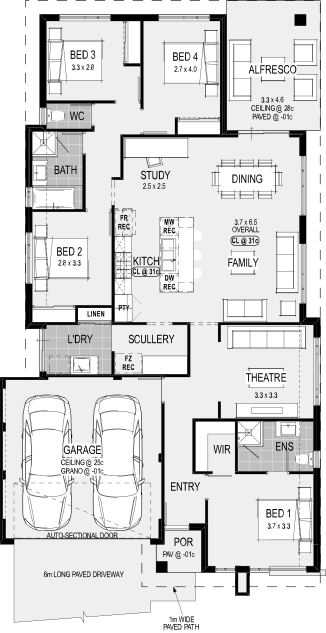
Resale Value and Future-Proofing Your Investment
Thinking about resale value is smart, even if you're building your forever home. Life changes, and understanding how each option performs in the market gives you confidence in your investment.
Single storey homes have broad market appeal. They attract first home buyers, downsizers, investors, and families alike. Their accessibility makes them attractive to a wide demographic, which generally supports strong resale demand. In established suburbs where the median buyer age is higher, single storey homes are particularly sought after.
Double storey homes tend to achieve higher sale prices in absolute terms, largely because they offer more living space. For families in the market for a four-bedroom home with multiple living areas, a well-designed two-storey home is a compelling option. In growth corridors where young families dominate the buyer pool, two-storey homes are often in high demand.
Future-proofing considerations:
- If you plan to stay in the home long-term, consider how your needs might change. A single storey home is easier to adapt as mobility needs evolve.
- If you're building as an investment or expect to sell within 10–15 years, consider the predominant buyer profile in your chosen suburb — that will tell you which design type is likely to attract the strongest demand.
- In both Perth and Melbourne, quality of build and inclusions matter as much as the number of storeys. A well-built single storey home with premium finishes will outperform a basic two-storey home in most cases.
Perth vs Melbourne — What to Consider in Each Market
Perth
Perth's land market offers a mix of traditional wider blocks in established areas and narrower lots in new estates across the northern and southern suburbs. With 49 single storey designs and 12 two-storey designs available in WA alone, there's a design to suit virtually any block and budget. If you're still deciding on your block, visiting a display home is a great way to experience both single and two-storey layouts in person.
Perth buyers also benefit from competitive house and land packages that match a home design to a specific lot — taking the guesswork out of whether your chosen design fits your block.

Melbourne
Melbourne's growth corridors — including Tarneit, Clyde North, Craigieburn, and Armstrong Creek — are home to a mix of block sizes, with many new estates offering lots suited to both single and double storey builds. In Victoria, we have 44 home designs across both options, and with 24 display homes spread across Melbourne, you can walk through a range of layouts to get a real feel for each.
In Melbourne, land prices in popular growth areas continue to rise, which means narrower lots and two-storey designs are becoming an increasingly practical choice for buyers who want generous living space without paying a premium for a wider block.

Which Option Is Best for You? A Quick Decision Checklist
Still weighing up your options? Run through this checklist to help clarify your thinking:
A single storey home might be right for you if:
- You have a wider block (15m+) or plan to buy one
- Accessibility is a priority (young children, elderly family members, or ageing in place)
- You prefer open-plan, all-on-one-level living
- You want to maximise outdoor entertaining and yard space
- You're building for long-term living and want minimal future modifications
A double storey home might be right for you if:
- Your block is narrow (10m–12.5m) or land prices make a smaller lot more practical
- You need more living space without a larger footprint
- You want natural separation between living and sleeping zones
- You have a growing family and want flexibility for the future
- Street presence and elevated views are important to you
The truth is, there's no one-size-fits-all answer. The best choice is the one that fits your block, your budget, your lifestyle, and your family's plans for the years ahead.
We offer an extensive range of both single storey and two-storey home designs across Perth and Melbourne, with expert consultants who can help you find the right fit. Whether you're just starting to explore or you're ready to build, the best next step is to visit a display home and see the difference for yourself.
Stay up to date!
Subscribe to receive the latest articles, exciting updates, and exclusive offers straight to your inbox!
Thank you!
We'll keep you updated.
Recent Articles

Knock Down Rebuild vs Building New on Vacant Land: Pros, Cons, and Costs
If you already own a home, or you're eyeing an older property in a suburb you love, you've probably weighed up the idea of a knock down...
Read Article
What to Look For When Visiting Display Homes: A First-Timer's Guide
If you're about to build a new home, visiting display homes is one of the smartest things you can do. But walking through a beautifully...
Read Article
Smart Home Features Worth Including in Your New Build
When you're building a new home, you have an opportunity that renovators and buyers of established properties simply don't — the chance...
Read Article