
Multi-Generational Living: Designing Homes for Extended Families
27 Nov 2025

Something's shifting in Australian homes, and you can feel it in the rhythm of daily life. Grandparents collecting kids from school. Young professionals cooking dinner alongside their parents. Three generations gathered around the same table, sharing stories and splitting bills.
Multi-generational living is back, and this time it's here to stay.
Between 2016 and 2021, households with three generations jumped by 22%. Today, one in five Australians share a home with extended family. In Sydney, it's one in four. These aren't just statistics - they're families making a practical choice that also happens to enrich their lives.
This is the future of Australian housing. Let's explore how to make it work.
Why Families Are Choosing to Live Together
The shift toward multi-generational homes Australia-wide isn't driven by one factor - it's a blend of economic, demographic, and social changes reshaping how we live.
The Housing Affordability Crisis. For young Australians, the goalposts for buying a house of their own keep moving further away. When you run the numbers, sharing a home makes financial sense. Split mortgages. Shared utilities and expenses. Pooled resources and reduced overall living costs. Research has found that more than half of people living in multi-generational arrangements do so due to financial reasons.
Australia’s Aging Population. The fastest-growing age group for multi-generational household members is over 65s. Life expectancies have increased, and the aged care system is under strain. Many families now prefer keeping elderly parents at home rather than in institutional care. It's often more affordable, and research shows seniors who maintain rich social lives stay healthier longer.
The Real Cost of Childcare. Full-time daycare runs $500+ weekly per child. For families with two children, that’s over $50,000 a year. Having grandparents around doesn't just save money - it also means kids grow up knowing their extended family. That's something you can't put a price on.
Cultural Traditions and Immigration Patterns. For many Australian families - particularly those from Mediterranean, Asian, and Middle Eastern backgrounds - living with extended family isn't a trend. It's tradition. Recent immigration has brought this perspective into the mainstream, reminding us that the nuclear family living separately is actually the historical anomaly, not the norm.
The Mental Health Factor. There’s a loneliness epidemic in Australia and around the world. Multi-generational living combats isolation across all ages, allowing for daily interaction, social connection, and built-in support systems.
The benefits stack up quickly:
- Financial relief: Shared costs can save families $20,000+ annually
- Built-in childcare: Grandparents on hand when you need them most
- Elderly support: Help with daily tasks while maintaining dignity and independence
- Emotional security: Someone's always home
- Stronger bonds: Daily moments that become lasting memories
So, the benefits stack up quickly. Multi-generational living is a practical, financially sensible, and an emotionally rewarding response to present realities. The question isn't whether this trend will continue - it's whether our homes and planning systems will adapt quickly enough to support it.
And that's where smart design becomes crucial.
The Foundation: Privacy and Connection in Balance
The best dual living homes solve the problem of crowding through thoughtful zoning. Successful multi-generational homes balance three things: privacy, connection, and flexibility.
Creating Separate Zones
Think of your home as having distinct neighbourhoods. The master suite at one end. Kids' rooms at another. Maybe a granny flat out back or a self-contained space upstairs. Each generation gets their own territory.
Key Zoning Features
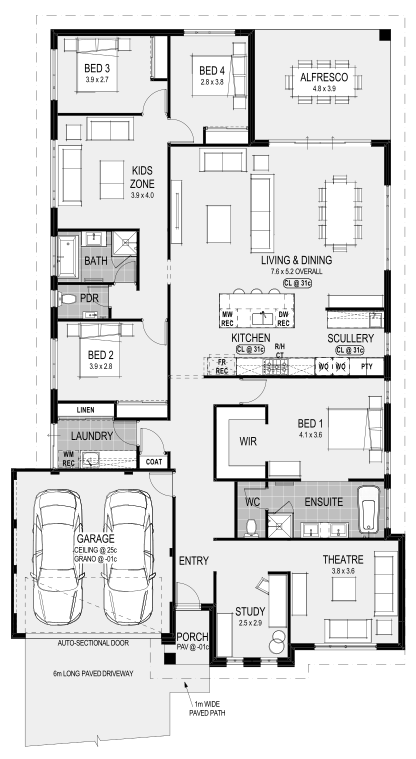
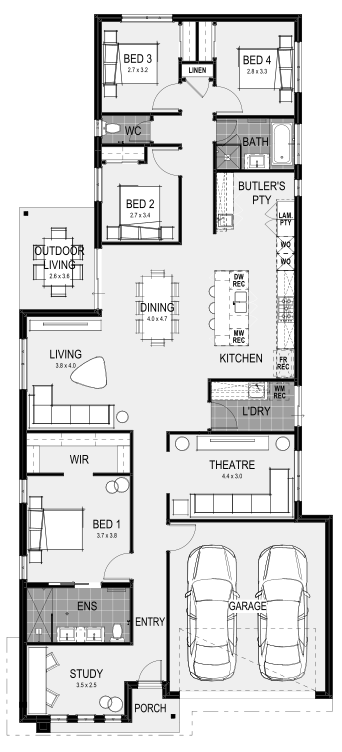
- Dual master suites positioned at opposite ends of the floor plan
- Separate external entrances so everyone can come and go independently
- Distinct living areas giving each generation a retreat space
- Multiple bathrooms strategically placed to avoid morning chaos
This isn't about building walls between family members. It's about giving everyone enough space to breathe. Below are some example floor plans that demonstrate how flexible, multi-generational layouts can come to life.
Spaces That Bring Everyone Together
Privacy matters, but so does connection. The heart of any multi-generational home is where everyone naturally gathers - usually the kitchen and the spaces around it.
Home Group designs generous open-plan areas that flow into outdoor entertaining zones. Large dining tables that can fit everyone. Alfresco spaces where Sunday barbecues stretch into evening conversations. These shared spaces don't force interaction, they invite it.
Different areas of the home play distinct roles in bringing families together. The kitchen acts as the daily gathering hub, supported by a butler’s pantry that keeps storage organised. Alfresco areas are designed for year-round entertaining, with weather-protected outdoor zones that can be used in any season. Living zones offer flexible spaces for various activities, allowing each generation to come together in ways that suit their routines. Courtyards provide private outdoor retreats, with landscaped areas tailored to give every generation their own place to relax.
The Future of Australian Housing
Multi-generational living isn't a temporary response to housing affordability - it's a fundamental shift in how we think about home.
For families considering this path, timing has never been better. Regulations are more accommodating. Design expertise has matured. Builders like Home Group have developed sophisticated approaches to creating homes that genuinely work for multiple generations.
The best multi-generational homes enhance quality of life for everyone involved. They acknowledge that modern Australian families look different than they once did, and they create spaces where these families flourish.
Whether you're a first-home buyer living with parents while building equity, a growing family wanting grandparents nearby for childcare, or anything in between - multi-generational living offers a practical, emotionally rewarding alternative to isolated nuclear families scattered across suburbs.
With thoughtful design, clear communication, and proper planning, sharing a home across generations strengthens family bonds while easing financial pressure. That's not a compromise. That's smart living.
Ready to explore how multi-generational living could work for your family? Get in touch with our expert team or call 13 14 14 today. Let's design a home where every generation has room to flourish - together.
Stay up to date!
Subscribe to receive the latest articles, exciting updates, and exclusive offers straight to your inbox!
Thank you!
We'll keep you updated.
Recent Articles

Knock Down Rebuild vs Building New on Vacant Land: Pros, Cons, and Costs
If you already own a home, or you're eyeing an older property in a suburb you love, you've probably weighed up the idea of a knock down...
Read Article
What to Look For When Visiting Display Homes: A First-Timer's Guide
If you're about to build a new home, visiting display homes is one of the smartest things you can do. But walking through a beautifully...
Read Article
Smart Home Features Worth Including in Your New Build
When you're building a new home, you have an opportunity that renovators and buyers of established properties simply don't — the chance...
Read Article